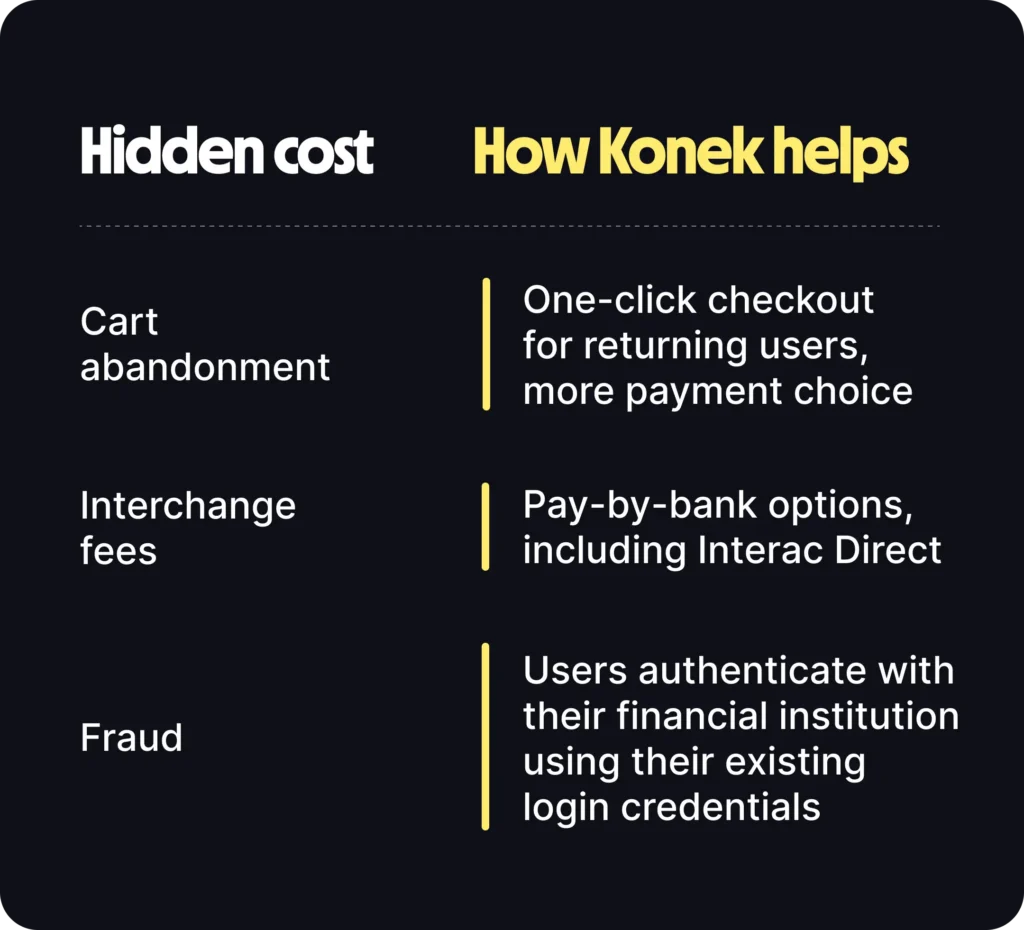
For a decade, Canada’s e-commerce sector enjoyed strong growth, with double-digit gains in most years. Then 2025 hit, bringing with it U.S. tariffs and inflation closer to home. According to Statistics Canada data, year-over-year growth in e-commerce sales slowed to 2.8 per cent between 2024 and 2025.1 During the same period, Bank of Canada survey data indicated that consumers became more cautious about their spending.2
In a tough, slow-growth environment, margins matter more than ever. For retailers selling online, that means looking beyond the obvious costs of running a business and into the expenses that don’t show up on a statement. A good place to start is the checkout process. Payment processing fees are familiar to retailers and easy to spot on a monthly statement, but fraud losses, chargebacks and cart abandonment can have just as much impact on the bottom line.
The reality is, many Canadian online retailers are losing far more at checkout than they realize. Some causes are visible; others are hidden. Let’s take a look at four areas where costs can add up and learn how Konek, a Canadian payment solution, can benefit merchants.
Ready to accept payments with Konek?
Talk to a specialist1. Fraud and chargebacks: The costs that don’t show up on a statement
Fraud isn’t always top of mind for online merchants, but perhaps it should be. For starters, it’s expensive. According to a 2026 LexisNexis study, every $1 of fraud can cost merchants in Canada and the U.S. an estimated $5.23, a figure that has increased by 64 per cent since 2022.3 It’s also more widespread than many would think.
Anti-fraud measures help, but they can also unintentionally drive customers away. Fraud controls that create friction or a poor user experience are cited as the top reason shoppers abandon new account creation.4
Then there are chargebacks, which carry their own costs. While processor fees typically range from $20 to $50,5 the all-in cost per dispute averages $1106 when you factor in merchandise loss, fulfilment expenses and labour costs. What’s more, merchants who fight chargebacks typically only win about 45 per cent of the time, with a net recovery rate of approximately 18 per cent.7 And the impact on cash flow is immediate: the funds come out of your account right away, while a dispute can take weeks to resolve.
Besides being expensive, chargebacks are risky for businesses. Any chargeback rate higher than 1 per cent can mean a business might be deemed high-risk.8 That label can lead to costly compliance reviews, penalties from payment processors and card networks, or being dropped by the payment processor.
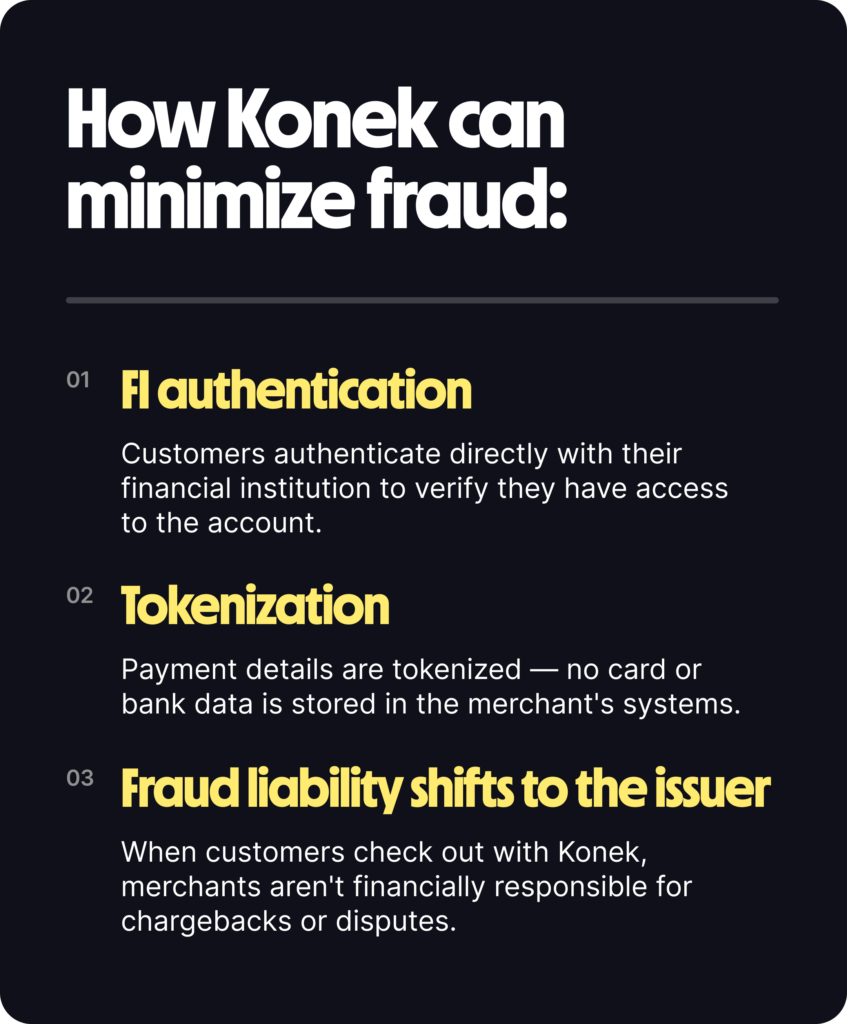
Konek gives retailers a single checkout solution for online payments made from chequing accounts, savings accounts, and credit or debit cards.
The platform uses bank-grade authentication, real-time fund verification and full issuer liability shift to help reduce fraud rates and chargebacks to merchants. This in turn can save time and resources and lower retailers’ overall costs compared to certain other payment methods.
2. The sales that never happen: Cart abandonment
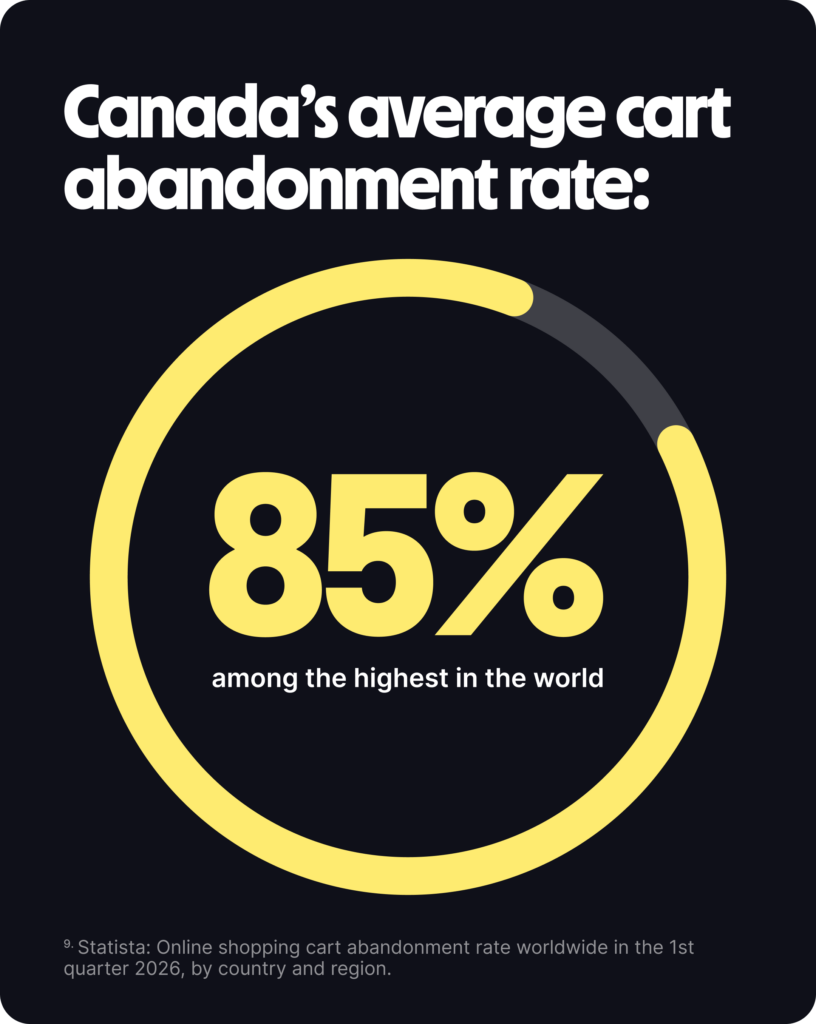
At 85 per cent, Canada’s average cart abandonment rate is among the highest in the world.9
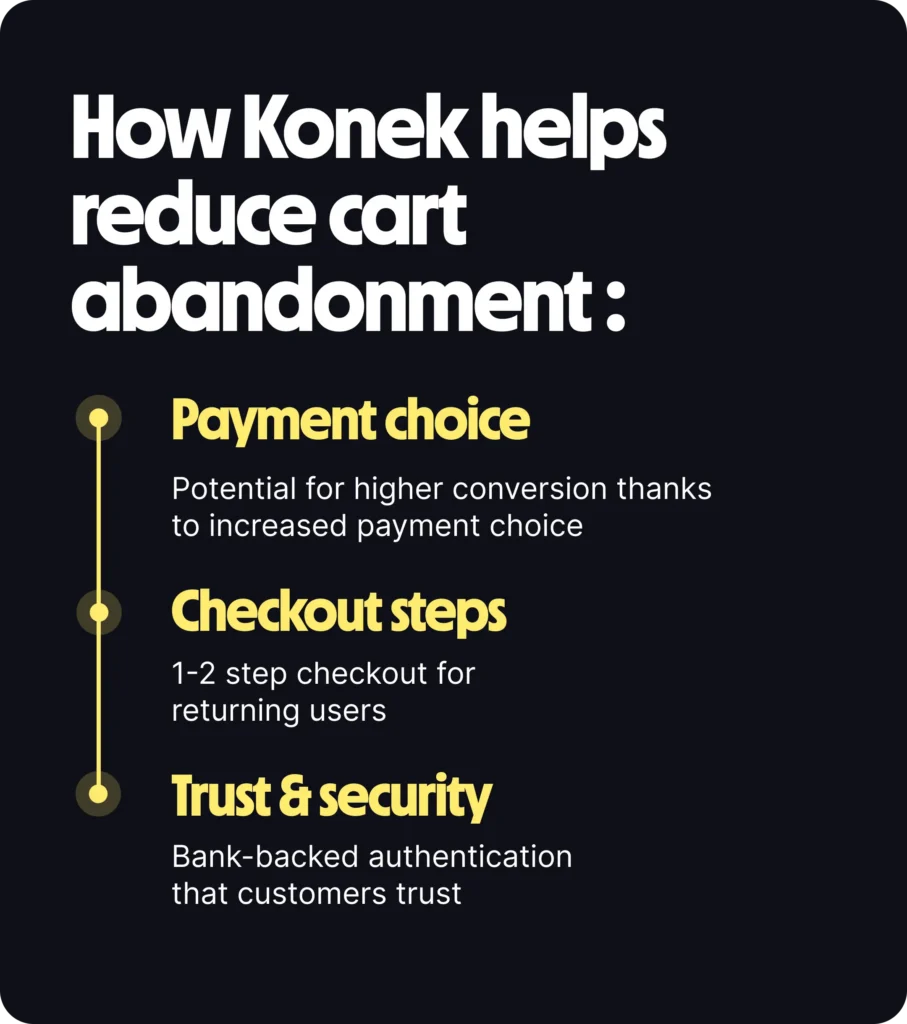
Canadian retailers are no strangers to shoppers leaving their carts behind before completing a transaction. There are several reasons why shoppers exit a page before hitting the “purchase” button. Some don’t want to create an account or find the checkout process too long or too complicated. Others don’t trust the site with their payment information.
Payment choice is another factor. If shoppers don’t see a payment option they prefer, an estimated 70 per cent will abandon their purchase altogether, according to a 2025 PYMNTS Intelligence report.10 As more Canadians turn to bank-direct payments, merchants with card-only checkouts risk leaving sales on the table.11
However, the impact of a bad experience isn’t just about a lost sale — it could mean a lost customer, too. According to a 2025 PwC report, one in three consumers said they would switch to a competitor after just one poor experience.12
3. The high cost of interchange fees
Most mid- to large-sized online retailers know that credit card processing fees are a substantial and largely unavoidable cost of doing business. Canadian e-commerce merchants typically pay between 2.5 and 3 per cent per transaction on standard credit cards. These rates are higher than those for in-store purchases, because card-not-present transactions carry a built-in fraud risk premium. Premium and rewards cards can push those rates higher still.
Each year, credit card fees cost Canadian businesses an estimated $5 billion.13 Retailers that only accept credit cards have no way around these fees. Konek supports additional forms of payment, such as pay-by-bank, which can give e-commerce merchants access to lower-cost alternatives and can offer customers additional ways to pay.
For online merchants who want to offer pay-by-bank, Konek is the only platform that offers Interac Direct, which is built on financial infrastructure Canadians already know and trust.
4. Payments as a potential profit-generation strategy
Fees, fraud and chargebacks, and abandoned carts can feel manageable on their own. But when taken together, the costs can add up to a strategic weakness for retailers that don’t address them. A smarter payment mix can help online merchants tackle all three issues at once.
In a slow-growth environment, every dollar counts for retailers. The transactions that are seamless, low-cost and successfully completed add up to more revenue and, ultimately, a competitive advantage.